A Guide to the Kalbarri Wildflower Season
The season in Kalbarri is generally on from July through October. Should the seasonal rains have been kind, the most impressive show tends to be in late August or September. Wildflowers are to be had in the sandplains and coastal tracks as well as within Kalbarri National Park, not to mention the gorge and ocean views the region is known for.
I am Isadora Fletcher and I would argue you should approach a wildflower excursion with some curiosity, not a checklist. One might put in for a hot walk in sensible footwear and be prepared to halt every few minutes over something that piques your interest; then again, there are blooms to be found right by the car park. What follows is a guide to making of a visit to Western Australia’s Coral Coast, telling you where to head, what to expect and how to go about it.
When the Blooms Put In an Appearance
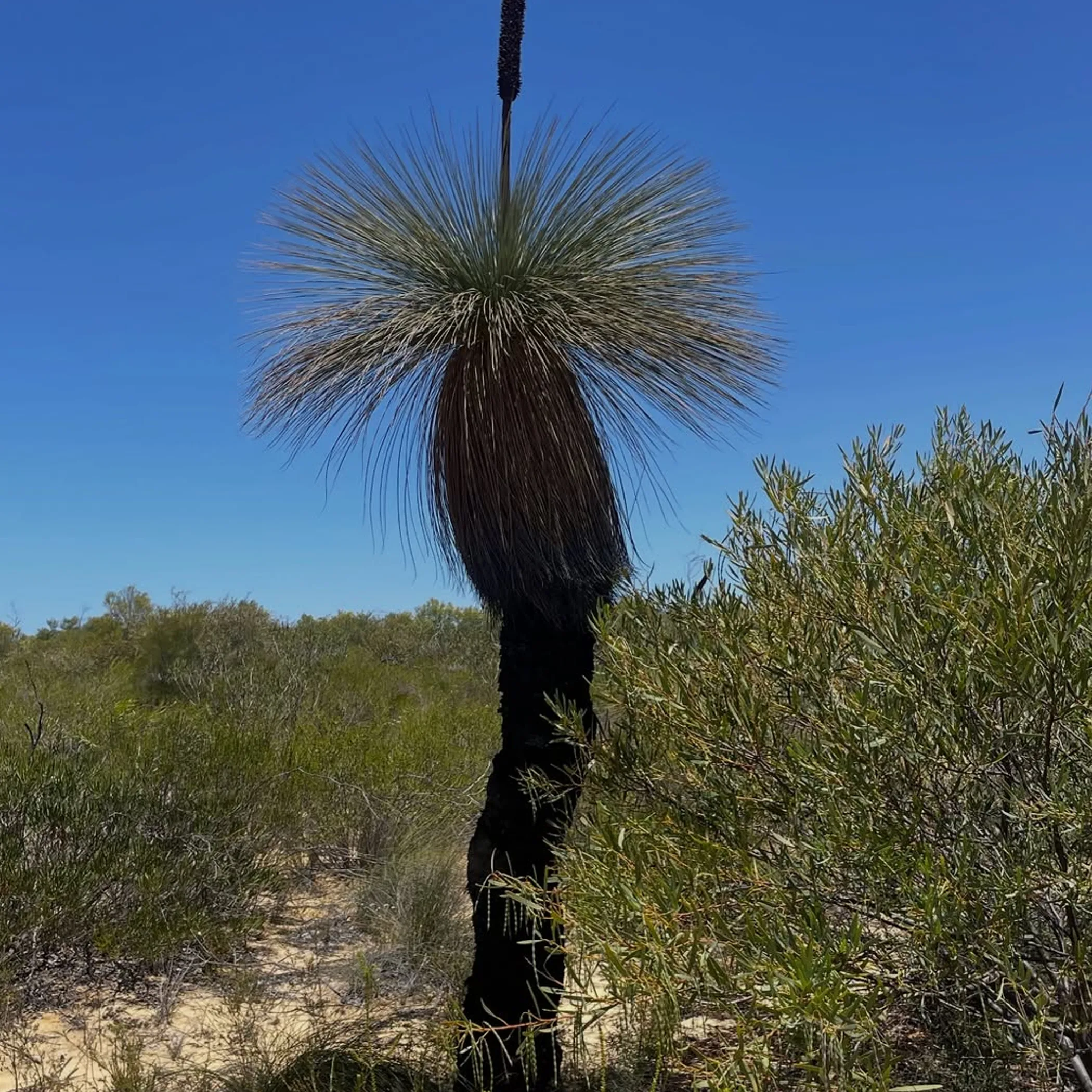
As with the rest of Western Australia, the wildflower season will ebb north and south in response to local conditions and the weather. For the most part, the native wildflowers in the Kalbarri area are best seen in the months of August, September and October, though July can yield some early colour.
Do not expect the bush to turn pink at the flick of a switch. An uneven rainfall means you could have a flowering patch on one side of the road and on the other nothing but flat ground. It is all part of it, which is why heeding local advice is important, especially when visiting scenic gorge lookouts.
July for Early Season
After a good winter rain, July is a good bet for the first of the blooms. The landscape will be green and subdued for the most part, but look closely and you will spot everlastings and wattles and the like starting to come out. It is a month for those who like cooler temperatures and to have the place to themselves. If the rains have been sparing the displays can be a bit patchy and some species will have to wait.
Colour in Late August
You will find more in flower on the sandplains and along the coast by late August. A sound option if you want to see some colour without being in the thick of the season. For photographing them, make of the morning; the air is cool and the light better, and the flowers have yet to be put through their paces by wind, dust and insects. Put on a pair of closed shoes and take in the view below the horizon.
September Tends to Be the Peak
In many ways this is the time to be in Kalbarri for wildflowers. You may come across everlastings in company with hakeas, grevilleas, orchids and wattles, a more interesting mix than at the tail end or start of the season. But it is also a busy time for visitors, so do not be surprised to see more traffic at the main draws and inns full up. To get a quiet shot, put in an early start and for once leave the Skywalk alone.
October and the Rain
Worthwhile after a heavy winter rain, although the heat and dryness will put an end to the display in any exposed spots sooner rather than later. Travellers in October are often looking to put in some coastal walking and swimming with the longer days. Make sure to check for any alerts from the park or on the heat before you set off; there is no point in getting cooked for the sake of a flower.
Picking Your Dates
It comes down to what you are after. For variety, September is hard to beat; for a quieter affair with decent bloom coverage, late August is a fine balance. Then there is the matter of the weather which can be as much of an experience as the flora. Wind is a nuisance with a camera and unsealed roads can be rough as guts after a shower.
| Timing | Likely Conditions | Best For | A Note |
|---|---|---|---|
| July | Early blooms, cooler | Quiet walks | Uneven displays |
| Late August | Sandplains in colour | Flowers and comfort | Reserve your room |
| September | Species overlap | First timers | Attractions will be busy |
| October | Warmer, later blooms | The coast and flowers | Exposed places may be done in |
While this guide will serve you for the 2026 WA season, one cannot be certain of flowering dates that far out. For a word on what has been seen lately and which tracks are worth while, the Kalbarri Visitor Centre is the place to enquire.
Flowers in and around Kalbarri
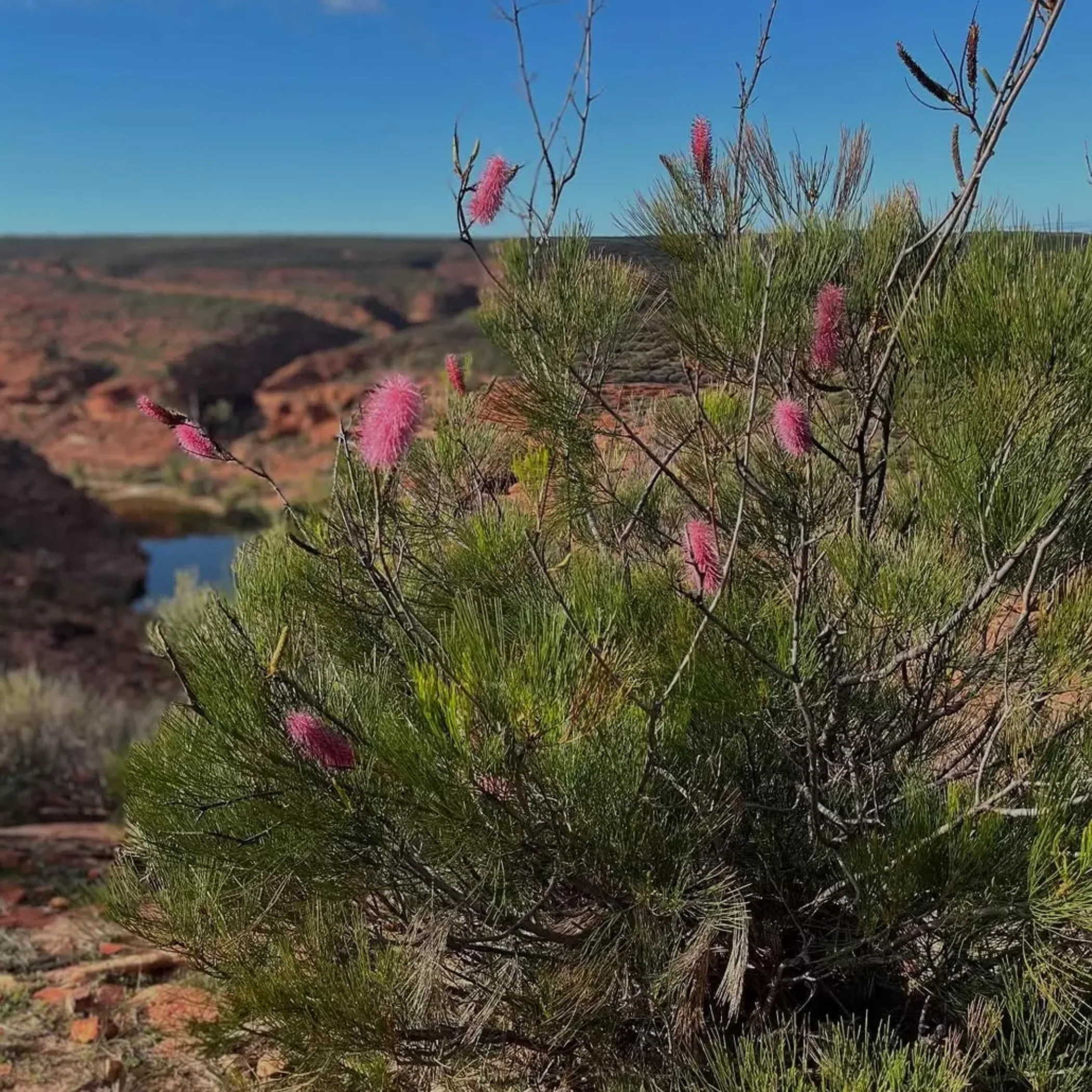
One does not have to be at a well known lookout or in some formal garden to come across wildflowers in Kalbarri. They are to be found all over the place: on the drive in, flanking a walking track, in the open country of the national park vicinity or in coastal reserves.
A good way to go about it is to mix in some roadside viewing with a visit to one or two of the principal attractions. When you do pull in, make sure it is an area where it is safe and allowed to do so; stay out of the way of traffic and for the love of it do not put your car on a blind corner. There are road trains on these regional roads that will have no time for your flower close-ups.
Getting to Kalbarri from Perth
The road from Perth comes via Australia’s Coral Coast. Most will put in a day to make the trip if they want to put in some fuel stops and proper breaks and still have a spine left when they arrive. The usual pattern is to head north through Geraldton first.
There is a certain freedom in a self-drive, particularly if the local flowering reports are pointing you in a direction. Make provision for a spare tyre, water, food and sun protection. And since you can not count on mobile reception once out of town, have your maps downloaded in advance.
Put in some time at the lookouts
In the inland part of the park the Skywalk and Nature’s Window are the big draws. From their vantage points and the tracks about them you will find seasonal colour and low shrubs, away from where the crowds congregate. For a bit of gorge view and a short walk Z-Bend and Hawks Head are fine places to be. Get there early and factor in some time for photos; before long you will be occupied with the odd insect or flower shape and what was meant to be a quick stop has taken an hour.
Think twice before you set off
Conditions in the bush can turn on a dime. Inquire as to any closures, the state of the track or fire danger. An accessible track may have flowers by the side of it but under a bushfire warning or with the wind up it is another matter entirely.
And leave the plant be. A field guide or app will do for identification after you have made a careful photograph; do not trample other plants or take seed just for the sake of it.
What the National Park has to offer
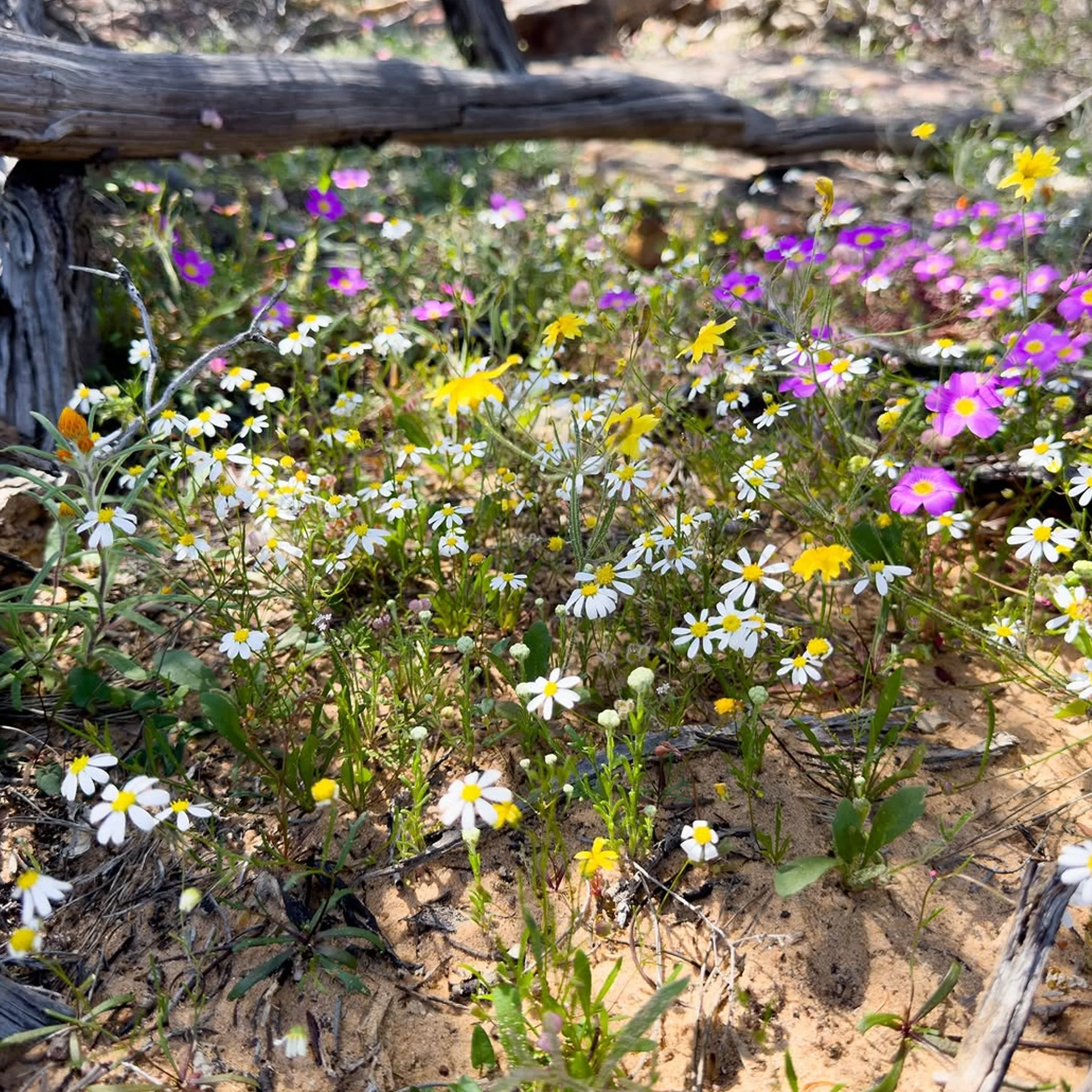
With its dramatic coastline and inland gorges the park presents a number of settings for the flower spotter, though do not expect a carpet of blooms at every scenic stop. Some of the walks are no trouble at all, others have their steepness and exposed rock. Be guided by the less able in your party and not the one who says everything is “easy as”.
Coastal walks
Over on the coast you have Rainbow Valley, Red Bluff, Natural Bridge and Mushroom Rock. The wind and the sun can put more distance on a short walk than you would think. The latter and its adjacent tracks are for those wanting something more active, but uneven ground is no friend to anyone with a balance problem or the wrong shoes. Mind the cliff edges and have a close eye on the children.
Red Bluff and Natural Bridge are good for dividing a day between the coast and the rock formations. The wind will play havoc with a delicate stem and your photography, so get the best of it early and put a layer in the car.
Some of the better coastal spots
These hotspots near Kalbarri are worth while for the shorter viewing and the ocean backdrop; there is no need to put in a full day on a bushwalk to see the season. At the more frequented stops visitors will make straight for the platform and be done with it. But a more leisurely perusal of the scrub is in order if you can be bothered to stay on the track and not wade through anything fragile.
Do not be under the misapprehension that you will see fields of flowers. They tend to be in small numbers here and there. It is a case of being rich in species without the whole of Kalbarri looking like a floral blanket.
Then there is Coalseam Conservation Park
For a self-drive in WA this is a good one to put on the itinerary. Being some way from Kalbarri itself it is better regarded as a route in its own right than a hurried detour to fit in between the gorges.
With a few days to spare and no aversion to some distance behind the wheel, the seasonal displays make for a fine addition to any Kalbarri itinerary. One should put in the time to check road conditions and see what is accessible before you set on a route.
The Western Australian Government has the official information and access advice for Kalbarri National Park on their site.
Flowers You May Come Across
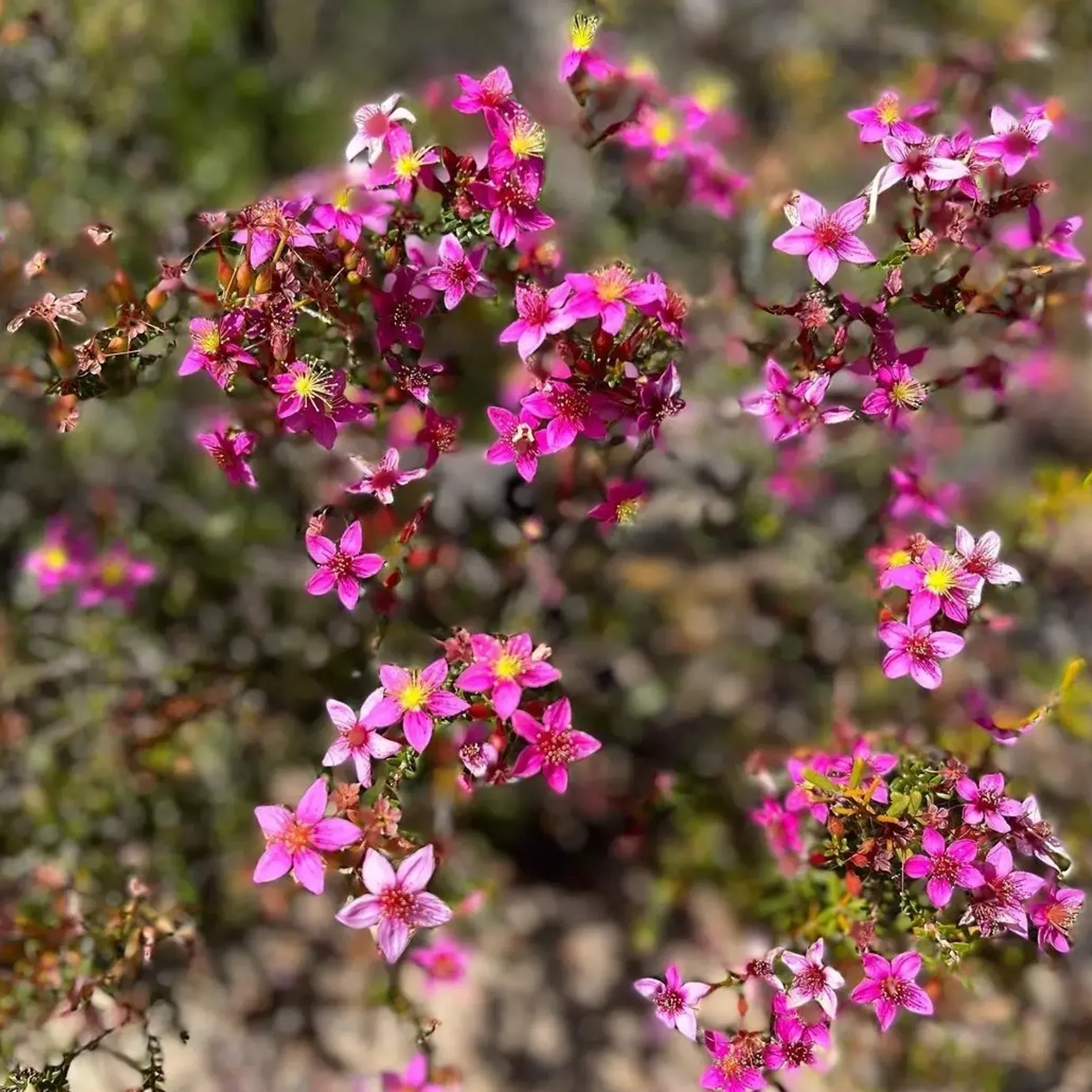
There is a good variety of native wildflowers to be had in Kalbarri, though the mix is subject to the soil, where you are and how much rain has fallen. Some would say the best part is chancing upon an unidentifiable bloom and putting a name to it afterwards.
You will find everlastings are the most conspicuous of the seasonal flowers; wattles put in their yellow and hakeas or grevillea type shrubs give things some form. Orchids can be there if conditions are right but do not count on them and they are not hard to overlook in the leaf litter and scrub.
To Read The Landscape
Do not rely on flower colour for identification. Make note of the petal count, the plant’s height, its leaves and if it is growing in clusters or by itself. Put down your camera for a shot of the whole thing as well as the close-up, it will be worth it down the track.
Sandplains will have other plants than you will see in the rocky gorges or on the coastal limestone. Changes in the density of the vegetation or the hue of the soil are telling. A stand of taller shrubs with low flowers at their side could be a different microhabitat in an otherwise unremarkable landscape.
A Matter Of Identification
Do not be too rigid about it. What is common in one region may not be in another and a photo does not always tell the whole story. Put aside any guess work when posting online and instead put the question to someone at the Visitor Centre or refer to a local guide.
For your photography get in low so as not to run over anything. A reflector is useful against the light but your hat and water are the more essential kit. People, priorities.
Putting Together A Trip
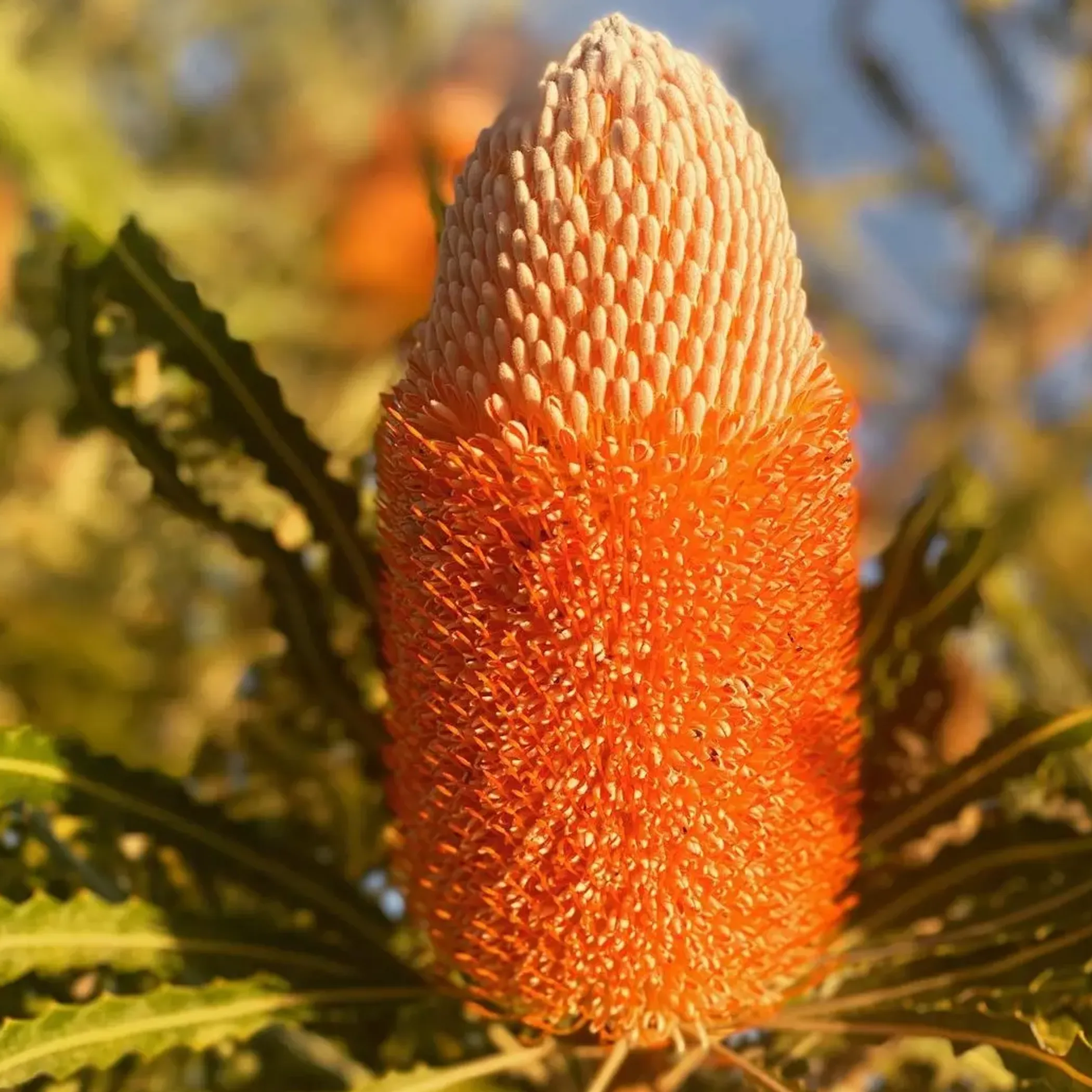
On paper a wildflower excursion in Kalbarri is straightforward: pick a window when they are in bloom, have a sensible route and be prepared for what comes. All too often I see people attempt to cram every flower stop and lookout into a single day.
Costs for fuel, food and a place to stay are dependent on the season and the vehicle, so look at local prices before you book. A self-drive gives you freedom but you need to allow in the budget for park fees, fuel and the odd bit of roadside assistance.
One Day In
Then there is the matter of making the most of a day. Resist the urge to tick off everything on the map. An inland spot like Z-Bend or the Skywalk and then head to the coast for Red Bluff or Natural Bridge is a sound approach.
Factor in time for the drive, to park and take photos and whatever else presents itself. If it is warm, get the hard walks done of a morning and leave the afternoon for something less taxing in town or at a coastal vantage point.
Who It Is For
Photographers, couples, older folk who will choose an accessible stop, families with a plan, those content to let the bush be without an over-stuffed itinerary. This is for the traveller with an eye for slow observation and the likes of moderate walking and a change of conditions. Those looking for the certainty of a flowering date, or who want to be in an air-conditioned environment at each viewpoint and put in long miles out of the sun, will find this is not for them. And anyone with limited mobility would do well to look over track conditions prior to coming and pick your stops on the basis of the surface, what facilities are on hand and how far you can go.
Packing Checklist
- Have with you a charged phone (offline maps loaded), water, something to eat, a first-aid kit, sun protection in the form of a wide-brimmed hat and some robust closed shoes.
- You should also put in a camera battery, binoculars, insect repellent, warm clothes for the morning, a spare tyre and bags to see your rubbish home.
- Before making the trip from town, make sure you have checked for any park alerts or fire warnings, the state of the roads, local flowering and the weather.
Reality as Opposed to Expectation
Expectation: You might think September means fields of flowers ad infinitum. Reality: In fact it is patchy and much depends on how much rain has been falling.
Expectation: You may assume all the attractions are within an easy walk. Reality: In truth some tracks are hard going in the heat, uneven and exposed.
Expectation: You might expect to put it all on film with a phone. Reality: The wind and small size of the flowers can be a nuisance in the bright sun. Put your expectations in check and appreciate that the bush will not oblige you.
Frequently Asked Questions
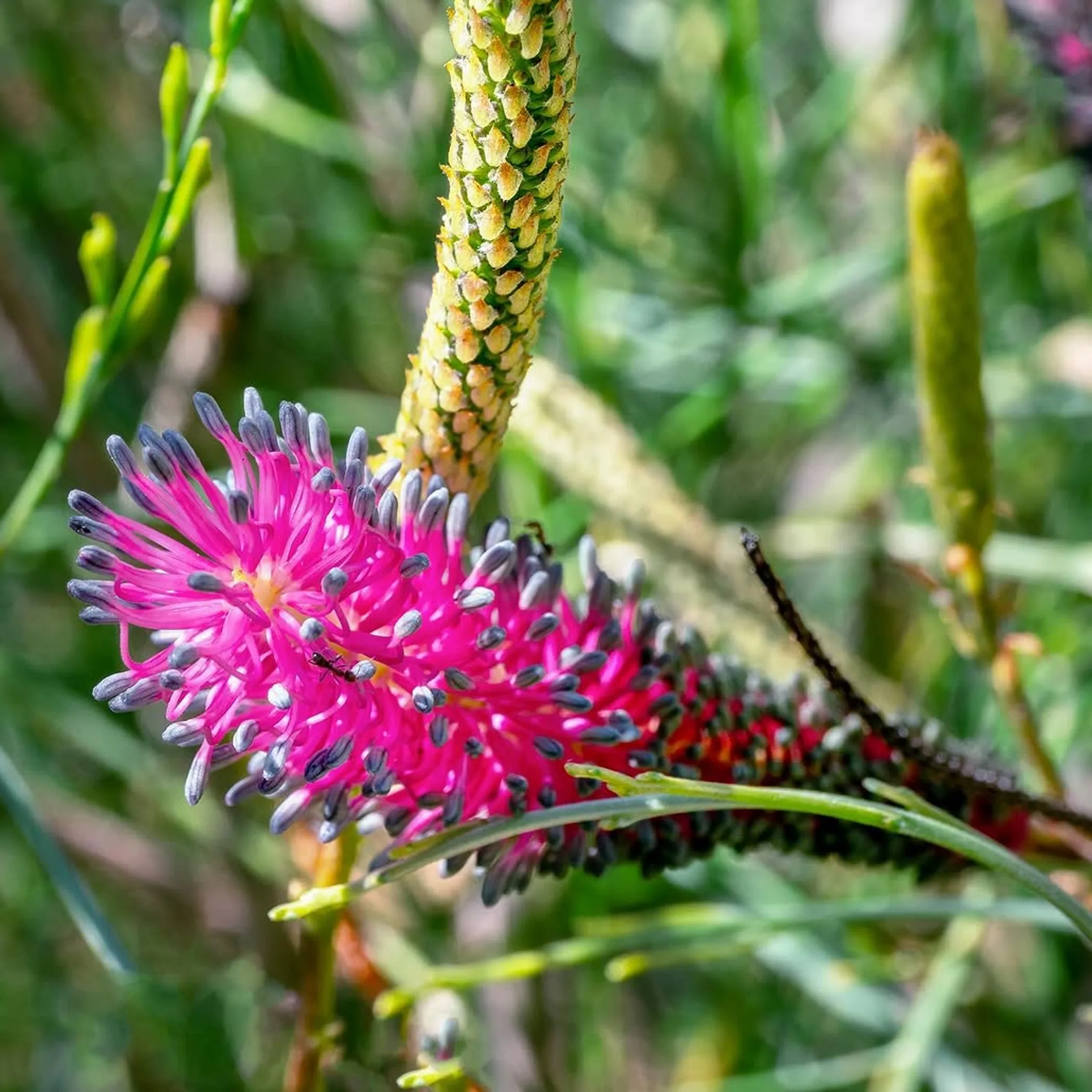
To help with setting dates and routes for a flower visit without making of it a military exercise, here are the answers to what travellers typically want to know before they book.
Western Australia: When to Go?
In Western Australia there are few better months than September for the wildflower season, many species being in bloom. But rainfall and regional differences can alter the timing so October or even late August can be very good in Kalbarri.
Kalbarri and its Vicinity
One will find them in the sandplain country off the regional routes, by the coast at Red Bluff and Natural Bridge and in the National Park. Since the best spot is a matter of the season, get some first hand reports from the Visitor Centre in Kalbarri.
2026 Tours?
There are options for a tour of the wildflowers in and around Kalbarri and wider Western Australia but they are seasonal. Do not go by an old itinerary when booking, prices and inclusions are subject to change, so contact the operator or visitor services.
WA Hotspots
The Coral Coast, inland regions and Coalseam Conservation Park are among the more popular. Whether you opt for a guide or to drive yourself will be dictated by road conditions, how many days you have and where you are going.
Is it an annual event?
They will put on a show every year but the variety and density will not be the same. Heat, wind and the soil have their part to play. With a little patience one can still identify fine wildflowers in a season of only modest colour.
Getting the Most of the Season
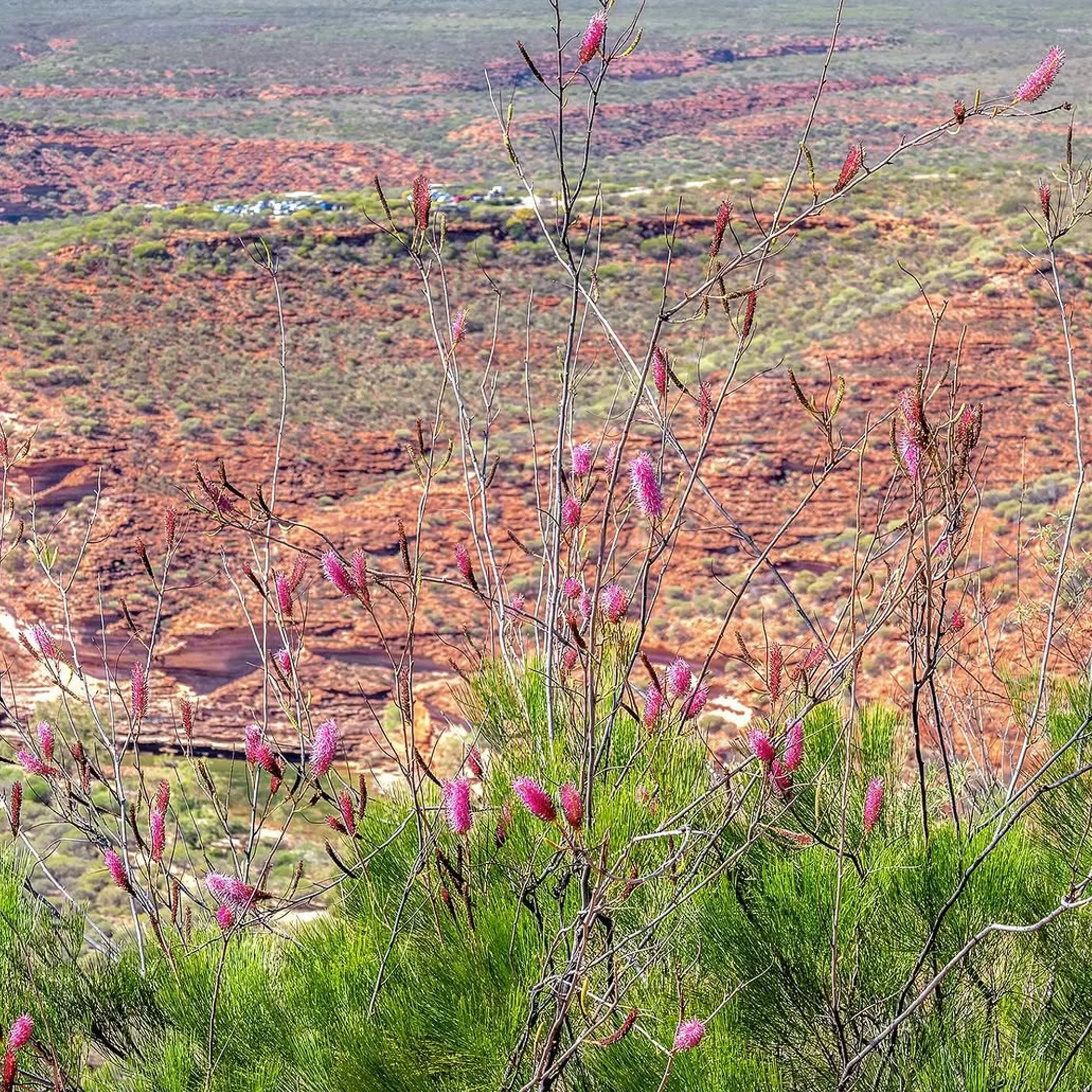
September is where most will start to plan for the Kalbarri wildflowers, though late August and October are serviceable. Put some time in for the national park and coastal side of things and verify local conditions before you set off on a track.
Then let Kalbarri show its colour in its own way. The flowers are small and of a season and could not care less about your timetable, which is what makes for a good trip. Be careful behind the wheel, walk with some thought and leave the blooms be.
